Hey there, fellow LED heads and gearheads—if you’ve ever hung a streetlight that flickers on a sweltering summer evening, or watched a cool white panel die 2 years early in a stuffy office, you know there’s a hidden villain in LED performance: ambient temperature. As someone who’s spent the last 10 years building LED drivers (that’s the brains behind every LED bulb, strip, or floodlight, for the uninitiated), I’m here to cut through the tech jargon and break down exactly how ambient temp messes with these tiny workhorses—and why getting it right makes all the difference. Let’s skip the boring white papers and talk real-world stuff, okay? LED Driver
First, let’s keep it simple: an LED driver’s job is to take the wobbly AC power from your wall (or the sketchy DC from a solar panel) and turn it into steady, perfectly calibrated DC that LEDs live and die by. Mess that up, and your lights either dim, flicker, or conk out entirely. Now, ambient temperature is the air temp around the driver—think 110°F asphalt in a parking lot, or 20°F cold storage, or even the cramped, unventilated ceiling of a grocery store where 100 lights are crammed together. That temp doesn’t just “feel hot” to the driver—it’s a literal input that rewrites its entire playbook.
Let’s start with the big one: component degradation. Every part inside an LED driver—capacitors, resistors, IC chips, even the tiny copper traces on the PCB—has a temperature sweet spot. The biggest culprit here is electrolytic capacitors, the little cylindrical things that smooth out power fluctuations. Most of these are rated for a 105°C max temp, right? But if the ambient air around the driver pushes the internal temp of the cap over that threshold, their lifespan doesn’t just shrink—it plummets. Rule of thumb I live by: for every 10°C you go above a cap’s rated temp, its lifespan cuts in half. So that cap meant to last 5 years in a 25°C room? It’ll be toast in 18 months if it’s sitting next to a LED array cranking out heat in 40°C ambient. I’ve seen this firsthand—last year, we fixed a batch of parking lot lights that failed in 2 years because the installers stuck the drivers in a sealed junction box with no ventilation, turning 35°C ambient into 65°C internal. Capacitors popped like popcorn, and suddenly half the parking lot was dark. No joke, that site still comes up in our emergency support tickets.
Next up: efficiency drop. Drivers aren’t 100% efficient—they waste a little power as heat, which is why they need heat sinks. But when the ambient temp is already high, they can’t shed that waste heat fast enough. So the driver has to work harder to push the same steady current to the LEDs, right? That means more power wasted, higher electricity bills, and even more heat piling up. It’s a vicious cycle. I did a quick test with our own drivers last quarter: at 25°C ambient, our driver was 92% efficient, putting only 8% of power into heat. Crank that up to 50°C, and efficiency dropped to 88%—so now 12% of power is waste heat, internal temp spikes another 10°C, and boom, lifespan takes another hit. This is why cheap drivers (you know the ones you find on Amazon for $2) suck so bad—they skimp on heat sinks and use garbage capacitors, so at high temps, they’re barely doing their job, and you’re throwing money out the window.
Then there’s thermal throttling—this is the driver’s built-in “chill out” mode, basically. Most modern drivers have a thermal sensor that kicks in when things get too hot. When that sensor detects overheating, it dial back the current to the LEDs, which makes the lights dimmer. For residential use, that’s annoying—your LED strip for the kitchen is suddenly half as bright on a hot summer day. But for commercial stuff? That’s a big problem. A grocery store shelf lighting that’s dimmer means you can’t read the price tags clearly, or a warehouse light that’s dimmer could be a safety hazard. And if the temp keeps rising, the driver might just shut off completely to protect itself—no warning, no nothing. I once got a call from a restaurant owner who thought his kitchen lights were broken mid-rush, turns out the drivers under the grills were cooking, hit throttling, and shut off. We had replacement drivers on site in 90 minutes, but they lost a ton of food because of that—thermal throttling isn’t just a tech issue, it’s a business issue.
Wait, what about cold temps? I feel like everyone only talks about heat, but cold is a whole other bag of worms. Let’s say you’re installing lights in a cold storage unit, or a highway sign in Minnesota where winter temps hit -20°F. Components get brittle when it’s that cold, right? Resistors can crack, capacitors can dry out too fast, and even the IC chips that control the driver’s current might not work as intended. We had a client who installed our drivers in a ski resort trail lighting last year—they used a cheaper brand first, and the drivers wouldn’t turn on at all when it dropped below 0°F. Their drivers wouldn’t initialize until the temp went up to 10°F, so half the trail was dark at night. We swapped them out with our cold-rated drivers, and they’ve had zero issues—we spec those for temps as low as -40°F, no problem. That’s the thing about ambient temp it’s not just hot—it’s whatever environment your lights are in, and you have to plan for both ends of the spectrum.
Now, let’s get into how we (LED driver suppliers) deal with this, because that’s what matters if you’re buying drivers. First, we don’t just slap a driver together and call it “universal.” We grade drivers by their operating temp range—most are “general purpose” for -20°C to 50°C, “high temp” for up to 65°C, “extreme cold” for down to -40°F. We also spec them with low ESR capacitors that handle temp swings way better than cheap ones, and we design PCBs with copper traces that conduct heat away fast. Heat sinks aren’t just an afterthought—we size them based on the max ambient temp the driver will see, plus the power output. For sealed applications like junction boxes, we even add thermal paste between the driver and the heat sink to fill in tiny air gaps that trap heat.
And then there’s thermal protection—we don’t just put in a simple sensor. Our drivers have what’s called “programmable thermal derating” that kicks in gradually, not all at once. Instead of suddenly cutting power when it hits a threshold, it slowly dials back current so you barely notice, not full dark. And we test every single driver in a climate chamber before it leaves our warehouse—we crank the heat up to 70°C, freeze it down to -40°F, shake it (for vibration, if it’s going on a highway or a roof), and run it 24/7 to make sure it holds up. No “batch testing” where only 10 units get checked—we do 100% functional testing under all temp extremes.
But here’s the big takeaway for anyone buying LEDs: ambient temperature isn’t something you can ignore. If you’re installing lights in a stuffy warehouse, don’t grab a cheap driver meant for a closet. If you’re putting lights in a frozen food aisle, don’t use a generic one. I’ve seen projects where people tried to save 50 cents per driver, and ended up replacing every light in the building 2 years early—total cost way higher than if they’d bought the right driver from the start.

Let’s recap to make sure we’re all on the same page, no fancy terms: ambient temp shortens driver lifespan by destroying components, makes drivers less efficient (costing you money), dims or shuts off lights when it matters most, and can even cause total failure. The good news is, when you pair the right driver with the right environment, you eliminate all those issues. No more flickering parking lot lights, no more mid-season light failures, no more sky-high electric bills from wasted power.
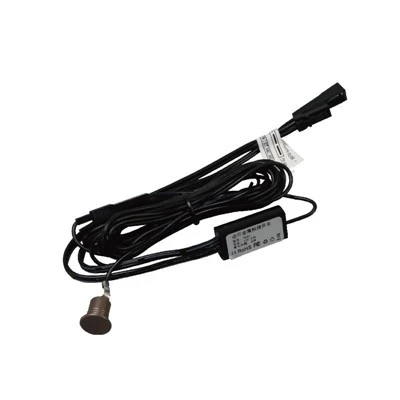
Wired Sensor Switch If you’re working on a project—whether it’s a residential LED strip, a commercial parking lot, industrial warehouse, or something with extreme temps—and you’re not sure which driver to pick, hit us up. We don’t do generic one-size-fits-all garbage. We help you spec the right driver for your exact ambient temp, application, and budget, so your lights last as long as they should. No pushy sales reps, no fine print, just straight talk about what works.
References
- Elferchichi, S., et al. (2019). “Impact of Ambient Temperature on the Lifetime of Electrolytic Capacitors in LED Drivers.” IEEE Transactions on Power Electronics.
- Murali, R., & Kumar, S. (2021). “Efficiency Degradation in LED Drivers Under Variable Ambient Temperature Conditions.” Journal of Display Technology.
- International Electrotechnical Commission (IEC). (2018). “LED Drivers for General Lighting Purposes – Safety Requirements.” IEC 61347-2-13.
- American National Standards Institute (ANSI). (2020). “Performance Requirements for LED Drivers.” ANSI C82.29.
Dongguan Lanbaoli Intelligent Technology Co., Ltd.
As one of the most professional led driver manufacturers and suppliers in China, our products have good reputation in the market. We warmly welcome you to buy durable led driver for sale here and get pricelist from our factory. Quality products and low price are available.
Address: 10th Floor, Building 32, Golden Town, No.7 Technology Avenue, Houjie Town, Dongguan City, Guangdong Province
E-mail: anna@lampow.cn
WebSite: https://www.lblsensors.com/
