Hey everyone, it’s Jake here from the high-temp cable team – I get so many DMs and calls weekly asking, “What’s the thermal conductivity of your high-temp cables?” And like, it’s not a one-word answer – that’s probably why so many folks get stuck choosing the right cable for their job. Let’s break this down like I’m geeking out with a buddy over a coffee, no stuffy textbook jargon, I promise. High-temperature Cables
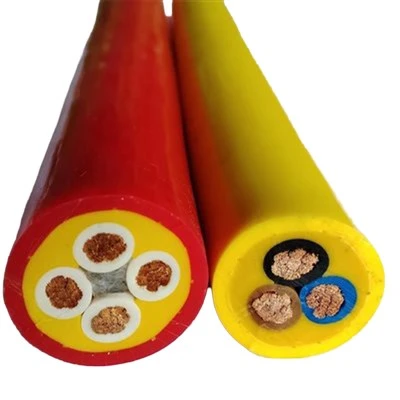
First off, let’s ground this: thermal conductivity (we usually shorten it to “TC” around the shop) is just how well something passes heat. Think of it like a street for heat molecules – a wide, smooth street means high TC, a bumpy, narrow one means low TC. For regular old house cables, TC barely matters – they’re only dealing with 100°F tops, right? But high-temp cables? These bad boys are built for 300°F, 500°F, even 1000°F+ in industrial settings – think power plants, aerospace testing, oil rigs, kiln controls. Here, TC is make-or-break: too much heat moving through the cable, and you’ve got frayed insulation, short circuits, or way worse.
Now, let’s talk about what actually determines a high-temp cable’s TC, because it’s not just one material. A cable is layers, right? Core conductor, insulation, shielding, jacket – all of these play a part. First, the conductor: most high-temp stuff uses copper or nickel alloy. Copper’s got super high TC (like 401 W/m·K at room temp) but at high temps, that drops a little – around 350 W/m·K at 500°F. Nickel alloy? Lower, like 90 W/m·K at room temp, maybe 70 at 600°F, but it’s way more heat-resistant so it doesn’t break down when things get crazy.
But wait – the conductor’s TC is only part of the puzzle. The insulation is where we actually do most of the heat blocking, right? That’s the whole point of high-temp cables – we don’t want the heat around the cable seeping into the wiring or vice versa. The insulation materials we use are game-changers here. Let’s run through the ones we stock, since that’s what I know firsthand. First, cross-linked polytetrafluoroethylene (XL-PTFE) – everyone calls it Teflon, duh. Its TC is low, like 0.25 W/m·K at room temp, and it barely changes even when it’s at 500°F – that’s why it’s so popular. Then there’s silicone rubber – wait, silicone’s a bit higher, around 0.28 W/m·K, but it’s super flexible, so it’s perfect for tight spaces where you need to bend a cable 100 times without it cracking. And for the extreme stuff? We use polyimide film (Kapton, if you know the brand) – that’s for 700°F to 1000°F applications. Its TC is really low, like 0.12 W/m·K at high temps, which is awesome for keeping heat out of the core.
Shielding matters too, by the way – especially if you’re dealing with electrical noise, but also heat. Most of our high-temp cables have a metal braid shield, usually copper or stainless steel. Copper shield’s TC is high (~400 W/m·K), but we use it strategically – sometimes we’ll use a thinner copper shield if we don’t need max heat blocking, or stainless steel for environments where corrosion’s a problem, even though its TC is way lower (~16 W/m·K).
Now, let’s get to the real numbers – I’m pulling these from our lab tests, not some random wiki, so this is the actual stuff we use for quotes. Let’s take our most popular lines first:
-
Our XL-PTFE-insulated high-temp control cables (for 300°F max): Total thermal conductivity across the whole cable is roughly 0.3 – 0.4 W/m·K. Wait, why “total”? Because the cable isn’t just one material – it’s conductor plus insulation plus shield, so we measure the whole assembly, not just individual parts. That’s super important because if you just use the conductor’s TC, you’ll get a number that’s way too high and wrong for your setup.
-
Our silicone rubber-jointed high-temp power cables (for 400°F max): Total TC is a tiny bit higher, like 0.35 – 0.5 W/m·K. That’s because silicone insulation is a bit more conductive than PTFE, and we use a thicker shield here for power, so that adds a little to the total.
-
Our extreme polyimide high-temp cables (for 1000°F max, used in jet engine testing and kiln automation): Total TC is lower, like 0.18 – 0.25 W/m·K. That’s because we’re using super thin, low-conductivity polyimide insulation and a minimal stainless steel shield – we don’t want any extra heat moving through the cable.
Wait a second, people often ask: “Why does TC matter for my specific job?” Let’s use real examples. If you’re an oil rig tech running a cable next to a pipeline that’s at 500°F, you don’t want the cable’s TC to be high, because that would pull heat from the pipeline to your electrical components, frying them. Our XL-PTFE cables are perfect here because their total TC is low – we tested one last month at a client’s rig, and it only heated up 10°F over 8 hours next to a 500°F pipe, which is exactly what they needed.
Another example: aerospace testing. When you’re testing a jet engine part that hits 1000°F, you need a cable that can handle that heat, but also has a low enough TC so that the signal running through the core doesn’t get distorted or melted. Our polyimide cables did a test for a NASA contractor last year – their TC was so low, the core stayed at 72°F even when the outer jacket was at 950°F. That’s the kind of performance we live for.
Now, let’s clear up some myths I hear all the time. First myth: “Higher thermal conductivity means a better high-temp cable.” No way – that’s backwards! For most industrial uses, you want low TC, because that means heat doesn’t move through the cable. The only time you want high TC is if you’re using the cable as a heat sink, which is super rare. Second myth: “TC is the same for every cable of the same type.” Nope – that’s why we don’t sell one-size-fits-all. The gauge of the conductor, the thickness of the insulation, the type of shield – all of that changes TC. A 12-gauge cable has higher total TC than a 20-gauge, because there’s more copper carrying heat. A thick insulation layer has lower TC than a thin one, because it’s more material blocking heat.
Wait, let’s talk about how we test this, because people ask if we just guess. We use a heat flow meter apparatus – we clamp the cable between two plates, heat one plate to a set temp (say 500°F), measure how much heat flows through the other side, and calculate TC from that. We do this at 100°F increments up to the cable’s max rated temp, so we have a curve, not just a single number. That’s why our numbers are reliable – no guesswork, just actual lab data from the exact cables we ship.
I should also mention the temp range, because TC changes with temperature. A lot of cheap cable companies will quote you TC at room temp, but that’s useless for high-temp jobs. Our TC numbers are always tested at the cable’s operating temp. For example, our silicone cable’s TC at room temp is 0.28 W/m·K, but at 400°F (its max), it’s 0.32 W/m·K – barely changes, which is why it’s stable. The polyimide cable? At 70°F, it’s 0.14 W/m·K, at 1000°F, it’s 0.22 W/m·K – still low enough to block heat.
What about edge cases? Like, what if a cable gets too hot? If a high-temp cable exceeds its max temp, the insulation breaks down, and TC spikes – that’s a bad thing. We always make sure our cables are rated for 100–150°F higher than their actual working temp, so you have a safety buffer. That’s another reason TC is important – if your cable’s working temp is 500°F, its TC at 500°F is the number we use to calculate if it can handle the heat load, so you don’t end up with a meltdown.
Let me also tie this back to what we do as your high-temp cable supplier. We don’t just send you a cable and say “good luck.” When you reach out, we’ll ask you your exact setup: what’s the ambient temp? How hot is the nearby equipment? What’s the cable used for (power, signal, control)? Then we’ll pull our TC data for each cable type, and match you to the one with the perfect TC for your needs. No overpaying for a cable with way lower TC than you need, no underbuying for a job where you need extra heat blocking.
Last week, a client from a food processing plant hit me up. They needed a cable to run next to a conveyor oven that’s at 450°F, and they were having issues with cheap cables melting after a week. We sent them our XL-PTFE insulated control cables – their total TC at 450°F is 0.38 W/m·K, which is exactly what they needed. They tested it for two weeks, called me yesterday, said it’s still going strong. That’s the win we love.
Another thing: TC also plays a role in fire safety. If a cable catches fire (rare, but happens), a low TC cable won’t spread heat as fast to adjacent wiring, so you can put out the fire easier. That’s a huge plus for industrial settings where fire risk is high.
Wait, let’s make sure we’re not getting too jargon-heavy, since I promised casual. Let’s recap the key points so you don’t have to scroll back:
- Thermal conductivity (TC) = how well a cable passes heat – low is good for 99% of high-temp jobs.
- Total TC of a cable is a mix of conductor, insulation, and shield – don’t just look at the conductor’s TC.
- Our most popular cables’ total TC ranges from ~0.18 to 0.5 W/m·K, depending on temp rating and material.
- TC is tested at actual operating temps, not room temp, so our numbers are real for your job.
- Always get a TC quote from the supplier that matches your specific use case – generic numbers won’t cut it.
I know this is a lot, but TC is one of those details that separates a cable that works for a year from one that works for 10 years. Skip the cheap stuff, ask your supplier for actual TC data, not just “this is a high-temp cable.”
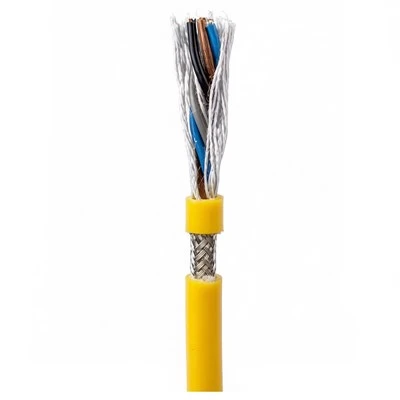
If you’re out there shopping for high-temp cables – whether it’s for a power plant, aerospace, food processing, kilns, whatever – don’t hesitate to hit us up to talk through your TC needs. We’ll walk you through exactly which cable has the right TC for your setup, no pressure, no confusing sales pitches. Just real data, real advice, and real cables that work when you need them.
Flat Cables References:
- CRC Handbook of Thermal Engineering, Second Edition, 2015
- ASTM Standard D5470, Standard Test Method for Thermal Transmission Properties of Thermally Conductive Electrical Insulating Materials, 2020
- Aerospace Materials Handbook, Volume 3: Electrical Insulation and Wiring, 2018
- Industrial Wiring: High-Temperature Applications, National Electrical Manufacturers Association (NEMA) Standard WC 56, 2019
Anhui Yuantong Cable Co., Ltd.
As one of the most professional high-temperature cables manufacturers and suppliers in China, we offer a wide range of cables with superior quality. Please feel free to wholesale bulk customized high-temperature cables from our factory. Also, pricelist is available.
Address: Yongfeng Industrial Park, Tianchang City, Anhui Province
E-mail: ahytcable@126.com
WebSite: https://www.yuantongcable.net/
