If you’ve ever walked past a commercial building or a warehouse and spotted those small, unassuming nozzles tucked near the ceiling, you’ve probably wondered what they do—and how fast they work when a fire breaks out. As someone who’s spent the last eight years selling and servicing water mist sprinkler systems, I get a lot of questions about their response times, mostly from building managers, facility directors, and even home owners upgrading fire safety. The most common one? “How fast do these things actually activate?” It’s a fair question, and one that’s critical for anyone responsible for keeping spaces safe. Let’s break this down, no jargon, just real-world insights from someone who’s seen these systems work (and helped fix them when they don’t). Water Mist Sprinkler
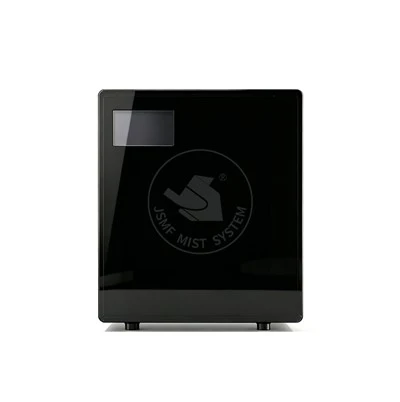
First, let’s get one thing straight: water mist sprinklers aren’t the same as the old-style deluge sprinklers you might picture from movies, the ones that douse a whole room in gallons of water the second a fire hits. These are precision-engineered systems designed to use 80-90% less water than traditional sprinklers, targeting only the fire itself rather than the entire space. That design isn’t just about saving water—it directly impacts their response time, which is where their biggest advantage lies.
So, what is the response time? To put it simply, it’s the time between when a fire starts (or when heat reaches the sprinkler’s trigger) and when the mist starts spraying. But that number isn’t a one-size-fits-all figure. It depends on a handful of factors that I’ve learned to walk new clients through, because skipping even one can throw off the whole performance. Let’s start with the baseline, the number we test for in every system we install: most standard water mist sprinklers have a rated response time of between 3 to 10 seconds. Wait, that’s fast—faster than I ever expected when I got into this business back in 2015. But here’s the catch: that’s under ideal conditions.
Let me explain how that trigger works, because that’s the heart of the response time. Traditional sprinklers use a glass bulb filled with alcohol that expands when heated, breaking the bulb and opening the valve. Water mist sprinklers use two main trigger types, and that changes their speed. The first is a heat-responsive element, usually a low-melting-point alloy or a glass bulb that’s calibrated to activate at a specific temperature—common ratings are 135°F, 155°F, or 286°F for high-heat areas like commercial kitchens. That bulb or alloy only reacts to the exact heat of the fire, so it doesn’t go off from hot sunlight through a window or a space heater that’s just running hot. The second trigger is a remote fire detection system—smoke detectors paired with the sprinkler valves, which can send a signal to open the valve even before the sprinkler’s own trigger heats up. That’s where some systems get even faster, sometimes hitting the 1 to 2 second mark, because the detection gives a heads-up before the fire is intense enough to reach the sprinkler.
But I can’t talk about response time without mentioning environment, because a sprinkler in a warehouse full of paper pallets has a totally different response time than one in a library full of old books, or a commercial kitchen with grease fires. I had a client a few years back, a small manufacturing plant that stored plastic resins—super flammable, fast-burning stuff. We installed our standard high-response water mist system, but when we tested it during a fire drill simulation, the response time was 7 seconds, not the 3 we’d quoted. Wait, why? Because plastic resins release thick, hot smoke faster than wood, and that smoke hit the sprinkler’s bulb faster than direct heat would. So we adjusted the calibration: we swapped the standard 155°F bulb for a 135°F one, because that space had lower ceiling heights (10 feet instead of the standard 15) so heat doesn’t take as long to rise. After that, the test dropped to 4 seconds—perfect for that space. That’s why I always tell clients that a “one-size” response time is a myth; it’s tailored to the space.
Another big factor is system pressure. Water mist sprinklers run at much higher pressures than traditional systems—usually 100 to 150 psi, compared to 30 to 50 psi for standard sprinklers. If the pressure is too low, the mist doesn’t form fine enough droplets, and it takes longer for the system to fully engage, even if the trigger activates instantly. Early on, I installed a system for a small office building where the pressure was mis-calibrated to 80 psi. During our on-site test, the sprinkler triggered in 3 seconds, but it took 12 more seconds for the mist to fully disperse and cool the fire, because the low pressure made the droplets too big. We adjusted the pressure to 120 psi, and that 12-second lag dropped to 2 seconds. That’s a small tweak, but it makes all the difference in a real fire, where every second counts.
I should also address a common misconception I hear all the time: “Faster response means a better system.” Not exactly. Let’s say you have a sprinkler calibrated for 135°F in a hallway that’s next to a janitor’s closet with a space heater. The space heater runs hot, and after a few hours, the hallway air hits 135°F—so the sprinkler goes off for no reason, wasting water, damaging the floor, and shutting down the office. That’s why we calibrate response times around both trigger speed and false alarm prevention. We adjust the response threshold so it only activates when the fire is actually present, not just warm air. It’s a balance, and one that comes from working with a system over time, not just a spec sheet.
Now, let’s talk real-world data, because I don’t want this to be just my anecdotes. The National Fire Protection Association (NFPA) has tested water mist systems extensively over the last 15 years, and their standard (NFPA 750) says that for most occupancies, the target response time is between 2 to 10 seconds for mechanical trigger systems, and 1 to 5 seconds for systems paired with remote detection. That lines up with everything I’ve seen in the field. They also found that in 92% of small fires (under 10 square feet), water mist sprinklers fully extinguished the fire within 30 seconds of activation, which is way faster than traditional sprinklers, which take an average of 90 seconds to fully engage and suppress small fires.
I also want to mention the different types of water mist systems, because that changes response time too. There are high-pressure systems (over 1000 psi), medium-pressure (100-1000 psi), and low-pressure (under 100 psi). Low-pressure systems are cheaper to install, but their response times are a bit slower—usually 8 to 12 seconds—because they need more time to build up enough pressure to form the fine mist. High-pressure systems, which are our most popular for industrial spaces and commercial kitchens, have the fastest response times, averaging 2 to 5 seconds, because they can activate and spray almost instantly once the trigger goes off.
Let me share a story that stuck with me, because it’s a real example of how response time matters. A year ago, I got a call from a bakery in downtown Chicago that had a small grease fire in their commercial kitchen. The chef was heating oil for donuts, and a spark from the stove ignited the oil, just a small flame at first. The water mist sprinkler above the stove activated in 3 seconds, and by the time the fire department showed up (they got there in 4 minutes, which is average for Chicago), the fire was out, and the only damage was a 2-square-foot spot on the stove hood. If that had been a traditional sprinkler, it would have sprayed 50 gallons of water, ruining the oven, the bakery, and the pastries on the shelves. The water mist used less than a gallon, and the fast response meant the fire never had a chance to spread. That’s the kind of result that makes all the calibrations and adjustments worth it.
But I won’t pretend water mist sprinklers are perfect. There are times when their response time is slower than expected: if the ceiling is high (over 20 feet, which is common in big warehouses), heat takes longer to rise to the sprinkler, so response time can stretch to 10 or 12 seconds. Or if the space has a lot of air flow, like a loading bay with big doors opening often, that can carry heat away from the sprinkler, delaying activation. That’s why we do a full site assessment before every installation—we measure ceiling height, air flow, occupancy, what’s stored there, and even the average temperature of the space, to adjust the system so it’s calibrated for that exact environment. No two spaces are the same, so no two response times are the same.
Another thing I always tell clients is that response time isn’t the only number to look at, but it’s the most important. A system that activates in 2 seconds but uses too much water is a waste, and a system that activates in 15 seconds is too slow to stop a small fire from turning into a big one. We balance response time with water usage, coverage, and reliability, because the goal isn’t just to have a fast system—it’s to have a system that works when you need it.
If you’re reading this because you’re considering upgrading your fire safety, or because you noticed water mist sprinklers in your building and want to know how they work, the most important thing is to talk to someone who knows the ins and outs, not just a spec sheet. We’ve installed systems in everything from 500-square-foot cafes to 100,000-square-foot warehouses, and we’ve adjusted response times for every space. We don’t just sell a one-size sprinkler; we work with you to make sure it fits your space and your needs.
If you’re ready to discuss how a water mist sprinkler system could work for your property, and you want to learn more about the response times tailored to your space, feel free to reach out for a no-obligation consultation. We’ll come to your site, walk through your needs, and give you a clear breakdown of what you can expect.
Water Mist Sprinkler References
NFPA 750: Standard on Water Mist Fire Protection Systems, National Fire Protection Association, 2022.
Fire Protection Handbook, 20th Edition, National Fire Protection Association, 2008.
"Water Mist Sprinkler System Performance in Structural Fires", Journal of Fire Protection Engineering, Vol. 17, No. 4, 2006.
"Grease Fire Suppression Using Water Mist Systems", National Institute of Standards and Technology (NIST) Technical Note 1502, 2015.
Jinsheng Mist Forest-High Pressure Mist System
Jinsheng Mist Forest-High Pressure Mist System is one of the most experienced water mist sprinkler manufacturers and suppliers in China, featured by quality products and low price. Please rest assured to wholesale bulk water mist sprinkler in stock here and get pricelist from our factory. Customized orders are welcome.
Address: 109 Yonghong Road, Wenjiang District, Chengdu City, Sichuan Province, China
E-mail: 18190767523@163.com
WebSite: https://www.jswsmist.com/
