If you’ve ever spent time under a Ford, GMC, or Mazda—whether you’re a weekend warrior wrenching in your garage, a mobile mechanic crisscrossing town for service calls, or a fellow supplier in the automotive space—you know that chassis and suspension work is equal parts precision, patience, and having the right tools. Over the 12 years I’ve worked as a parts and tools supplier focused exclusively on Ford, GMC, and Mazda chassis and suspension systems, I’ve seen guys show up to jobs with a socket set and a prayer, only to leave mid-job because they’re missing that one specialty tool that prevents stripping a thread, damaging a bushing, or redoing a three-hour job twice. This post isn’t just a list of tools—it’s the ones I actually reach for when I’m repairing a Mazda 3’s front strut mount, replacing a Ford F-150’s track bar joint, or servicing a GMC Sierra’s rear leaf spring hangers. No flashy, one-use tools; just the reliable, workhorse gear that keeps these three brands’ suspension and chassis systems running like they’re supposed to. Let’s dive in. For Ford GMC Mazda Chassis and Suspension Systems
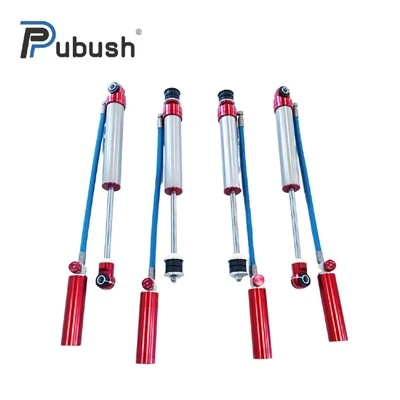
First, let’s set the context: Ford, GMC, and Mazda might overlap in their reliance on basic chassis and suspension parts (control arms, ball joints, bushings, struts, shocks, sway bar links, etc.), but each brand has tiny, brand-specific quirks that make a generic tool fail or, worse, cause damage. For example, a ball joint press that works on a 2019 Ford Escape will jam on a 2022 Mazda CX-5’s tapered joint because Mazda uses a slightly smaller thread pitch for the press adaptor. GMC’s full-size pickups have thicker track bar brackets than Ford’s comparable F-series models, so you need longer adaptors there. These aren’t trivial differences—they’re the stuff that separates a professional job from a home repair that leaves your steering pulling or your ride bouncing. That’s why I don’t just stock tools for all three brands; I curate kits tailored to their common chassis and suspension service tasks, after testing hundreds of options to see what actually holds up under repeated use.
Let’s start with the foundational tools, the ones you’ll use on 90% of basic suspension and chassis jobs across all three brands. First up is a high-quality, metric and SAE combination socket set with a ½-inch drive, plus a set of ¼-inch drive for smaller fasteners. Wait—why both? Ford, GMC, and Mazda use a mix, but it’s not random. Smaller fasteners on sway bar end links or strut bolts are often metric, while larger chassis bolts on frame mounts are SAE, especially on older GMC and Ford full-size trucks. The key here is to get a set with impact-grade sockets, not the cheap ones from the big-box store. I’ve seen too many impact sockets crack when torqueing a GMC Sierra’s 18mm sway bar link bolt that’s been corroded by road salt for three Minnesota winters. Also, invest in a set of deep sockets and swivel extensions—without deep sockets, you’ll never reach the back of a Mazda CX-5’s upper control arm bolt, and swivels are non-negotiable for tight engine bay spaces on Ford compact SUVs.
Next, torque wrenches. This is non-negotiable for chassis and suspension work, because over-tightening can snap a control arm stud or warp a strut mount, and under-tightening will leave you with a rattling, unsafe ride. You need two: a ½-inch drive torque wrench for larger frame and suspension bolts (rated for at least 150 lb-ft, which covers most GMC and Ford truck chassis bolts) and a ⅜-inch drive torque wrench for smaller components like sway bar links and ball joint bolts. Here’s a brand-specific tip I’ve picked up: Mazda specifies a torque of only 37 lb-ft for the front sway bar link bolts on the MX-5 Miata, while Ford uses 55 lb-ft for the same part on the Bronco Sport—so a torque wrench with clear, easy-to-read markings is essential, no guessing. Skip the clicker-style wrench that’s hard to adjust for lower torques; I prefer a beam-style for smaller bolts and a clicker for larger, higher-torque jobs.
Now, specialty tools that are non-negotiable for basic suspension service, and where generic tools fall short. Let’s start with ball joint and control arm press sets. As I mentioned earlier, Mazda, Ford, and GMC each have unique tapered joint sizes, and a one-size-fits-all press will either not seat properly or damage the rubber boot on the ball joint, which is why my company stocks brand-specific adaptor kits for this exact reason. For example, a typical press kit will have adaptors that fit Ford F-150 upper ball joints, but Mazda’s ball joints have a smaller diameter on the press bore, so adding a set of Mazda-specific adaptors turns a generic press into a tool that works on all three brands. I also always recommend a two-jaw puller as a supplement to the press—when the ball joint is stuck in the steering knuckle, the puller lets you apply even pressure without prying, which is perfect for GMC’s heavy-duty pickups where rust and road grime seize parts together.
Next, strut spring compressors. This is one tool you never want to buy cheaply, because a failing spring compressor can be deadly. Let’s break it down by brand: Ford and GMC full-size trucks use large, dual-coil springs, while Mazda’s compact and midsize cars and SUVs use much smaller, single-coil springs. That means a set of heavy-duty strut spring compressors for full-size vehicles, plus a set of lightweight, narrow compressors for Mazda’s smaller struts, works across all three brands. I’ve seen guys use a generic automotive compressor on a Mazda 3’s strut, and it slips because the spring isn’t seated properly on the smaller hooks— that’s a disaster waiting to happen when the spring releases unexpectedly. My go-to compressors have hardened steel hooks and a ratcheting mechanism to keep tension steady while you work.
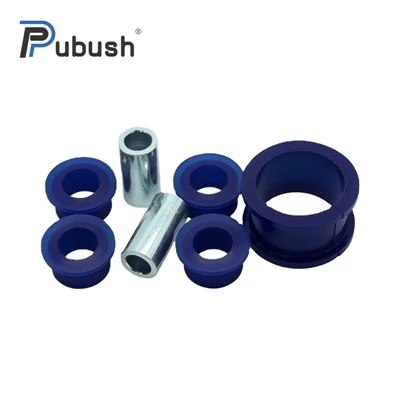
Bushing tools. Replacing control arm and sway bar bushings is a huge part of basic suspension maintenance, and there’s no way to do this right without dedicated bushing drivers and a press. Generic socket sets work for some small bushings, but they’ll warp or crack larger rubber or polyurethane bushings used on GMC Sierra rear leaf spring bushings or Ford Explorer front control arm bushings. For these, I use a bushing press kit with interchangeable metal drivers sized to match every common bushing diameter across Ford, GMC, and Mazda models. A pro tip here: when pressing in a new bushing, always lube the outer and inner surfaces with a light coating of rubber-safe grease or anti-seize (for metal-on-metal interfaces) to prevent binding—this makes the job go twice as fast and extends the bushing’s life.
Let’s not forget chassis-specific tools that keep your jobs safe and accurate. First, jack stands rated for at least three tons each, no car ramps or single jacks—when you’re working under a Ford Super Duty or GMC 2500, you need a stable, level lift. I keep a pair of heavy-duty jack stands with wide bases in my truck at all times, and I never let a team member start work without them. Second, a floor jack with a low profile—this is essential for getting under Mazda’s low-slung sedans and compact SUVs, and it makes lifting full-size trucks much easier than a standard jack.
Also, a front-end alignment tool is part of basic chassis maintenance, right? For home mechanics, a DIY alignment kit (the kind that mounts to the wheels and uses a smartphone app) works for small cars like Mazda 3, but for larger vehicles like Ford F-150 and GMC Sierra, you’ll want a basic two-wheel alignment tool that mounts to the steering knuckles. The key here is that all three brands have different alignment specs—Mazda requires a much tighter toe-in for fuel efficiency, while GMC and Ford trucks have slightly looser specs to handle heavy loads—so having a tool that can measure camber, caster, and toe is non-negotiable for getting the job right.
Now, let’s talk about overlooked tools that make the job go smoother and prevent damage, especially for these three brands. First, penetrant lubricant—nothing frees up a seized bolt on a GMC track bar joint or a Mazda sway bar link like a good penetrant. I always keep a can of high-temperature penetrant with a long nozzle to get into tight spaces. Second, a wire brush and a bottle of brake cleaner—prepping the bolt threads before torquing is critical, especially on older Ford and GMC models that have rust buildup. Brake cleaner removes grease and grime, and a wire brush cleans the threads so your torque wrench reading is accurate. Third, thread locker— for critical chassis bolts that vibrate (like sway bar end links), a medium-strength thread locker ensures the bolt stays torqued properly, which is something I recommend for all three brands to prevent rattling and safety issues.
Wait, let’s circle back to why this matters specifically for Ford, GMC, and Mazda, not just any vehicles. Over my years as a supplier focused exclusively on these three brands, I’ve noticed that their chassis and suspension systems are designed with subtle, brand-specific tolerances that generic tools don’t account for. For example, a 2021 GMC Terrain’s front control arm has a mounting bolt that’s 1mm longer than the equivalent bolt on a 2020 Ford Escape, so if you use a too-short socket, you’ll only tighten the bolt halfway, leading to a loose control arm. Mazda uses a special type of rubber bushing on the Miata that requires a very specific press adaptor to avoid tearing the bushing’s outer layer, which is why I’ve built my tool kits with those adaptors included, not as an afterthought.
I’ve also learned from customers—both home mechanics and small repair shops—that wasting money on cheap tools leads to more jobs, not less. A $20 ball joint press from a big-box store will bend on the first GMC Sierra ball joint press, and you’ll have to buy a new one, plus spend extra time ordering a quality one that fits. Investing in quality tools tailored to these three brands means you get the job done right the first time, no reworks, no damaged parts, no frustrated customers.
Now, I know many of you reading this are either working on your own vehicles or running a small service shop, and you might be wondering where to get these tools that are specific to Ford, GMC, and Mazda. As a supplier exclusively focused on Ford, GMC, and Mazda chassis and suspension systems, I’ve curated a full line of tools and parts tested specifically for these brands, so you don’t have to waste time sorting through generic gear that doesn’t fit. Whether you’re a home mechanic who needs a basic ball joint press set or a shop owner who wants a complete kit for common suspension repairs, we have options that work for every budget and job size.
If you’re working on a Ford, GMC, or Mazda vehicle and need tools to tackle basic chassis and suspension maintenance, let’s connect. I can help you pick out the right tools for the job, answer questions about brand-specific quirks, and make sure you have everything you need to get the job done safely and correctly.
Vehicle Suspension System References:
- Ford Motor Company. (2022). F-Series Super Duty Chassis and Suspension Service Manual. Dearborn, MI: Ford Motor Company.
- General Motors LLC. (2021). GMC Sierra HD Suspension and Chassis Repair Guide. Detroit, MI: General Motors LLC.
- Mazda Motor Corporation. (2020). Mazda CX-5 and MX-5 Miata Chassis and Suspension Service Specifications. Hiroshima, Japan: Mazda Motor Corporation.
- Automotive Service Association. (2023). Best Practices for Chassis and Suspension Tool Selection and Safety. Frisco, TX: Automotive Service Association.
- SAE International. (2022). Standard J2284: Torque Specifications for Passenger Vehicle Suspension Fasteners. Warrendale, PA: SAE International.
Xingtai Refined Machinery and Auto Accessory Co., Ltd.
Xingtai Refined Machinery and Auto Accessory Co., Ltd. is one of the most professional for ford gmc mazda chassis and suspension systems manufacturers and suppliers in China, featured by quality products and low price. Please rest assured to wholesale durable for ford gmc mazda chassis and suspension systems made in China here from our factory. Customized orders are welcome.
Address: XINGTAI REFINED MACHINERY AND AUTO ACCESSORY CO., LTD507 NORTH TAIHANG ROAD, XINGTAI CITY, HEBEI PROVINCE, PR.
E-mail: lindy@rfauto.biz
WebSite: https://www.pubush-suspension.com/
