Hey everyone, Wrapped Wire
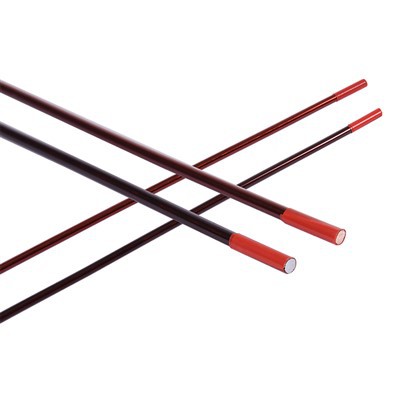
Let me cut to the chase—if you’re here because you’ve ever stared at a roll of wrapped wire in a hardware bin or our warehouse and thought, “Wait, can this thing actually move data, not just power?” then you’re in the right spot. I’ve been selling wrapped wire (yeah, that’s our whole gig as a supplier) for like 8 years now, and I get asked this question nonstop. Most folks hear “wrapped wire” and immediately picture it as that old-school, insulated stuff you use for basic home wiring—like the kind that runs from your wall socket to a lamp. But here’s the thing: wrapped wire is way more versatile than people give it credit for, and it’s actually popped up in data transmission more times than you’d think. Let’s break this down, no jargon, I promise.
First, let’s make sure we’re on the same page about what wrapped wire even is, because a lot of people mix it up with other types. Wrapped wire is basically a single core of conductor copper (most of the time—sometimes it’s aluminum for super specific uses) wrapped in multiple thin layers of insulation, not a single thick jacket. The layers are usually things like nylon, polyester, or even polyimide for high-heat spots. It’s got that flexible, smooth feel, and you’ve probably seen it in tiny stuff—like the wiring inside old keyboards, or the coils in small motors. Back in the day, it was mostly for low-voltage power or control signals, right? But over the last 15 years or so, engineers have started testing it for data, and the results are… not what everyone expected.
Let’s start with the biggest myth: that data transmission needs expensive, fancy cables—like HDMI, Ethernet, or fiber optic stuff. That’s true for long distances, sure. But what about when you’re moving data over short spans—like inside a smartphone, or between tiny circuit boards in a drone, or even the control panel of a factory machine? Those spots are where wrapped wire is shining. Why? Because it’s tiny. We’re talking wire cores as thin as a human hair sometimes. You can fit hundreds of wrapped wires into a single, super compact bundle without taking up half the space of a traditional Ethernet cable or even ribbon cable. And space is a huge deal now—everyone wants smaller electronics, faster gadgets, more compact industrial gear. Wrapped wire checks that box.
But wait, can it actually carry data without losing signal? That’s the big question, right? I asked our in-house tech guy (let’s call him Jake, he’s the one who tests all our wires for weird uses) about this last month, and he walked me through the basics that even I get. When you send data, you’re sending tiny electrical signals. Wrapped wire’s insulation is designed to keep those signals from leaking out or picking up interference from other wires nearby. Early tests in the 2000s had some kinks—like signal drop-off when data got above, say, 100 megabits per second. But modern wrapped wire has improved so much. Now, we’ve got custom formulations where the insulation layers are thinner and more uniform, and the core copper is oxygen-free (that’s a big one—less copper impurities mean cleaner signals). Jake’s team tested some of our high-grade wrapped wire last year for a drone manufacturer that needed to move flight data between the camera and the flight controller. They hit 1 gigabit per second over a 6-inch span, no lag, no interference. That’s enough to carry 1080p video in real time, by the way.
Now, let’s talk about the drawbacks, because I’m not gonna lie to you. Wrapped wire isn’t for every data job. For one thing, distance is a problem. Even the best wrapped wire we make starts to lose signal strength at around 15 feet, max. Compare that to regular Ethernet, which can go 328 feet, and fiber which can go way further. So if you’re running a network in an office building or pulling data between two buildings, wrapped wire is out. But if you’ve got two circuit boards sitting a foot or less apart, that’s perfect. Another downside? It’s way more sensitive to crosstalk if you cram too many wires together without shielding. Wait, but here’s a hack—most people don’t know this: you can wrap a thin conductive shield (like copper foil) around a bundle of wrapped wire, and that cuts crosstalk almost completely. We’ve had a ton of customers do that for industrial control panels, and they swear by it.
Let me also share a real-world example that’s not just some lab test. A customer of ours makes wearable fitness trackers. A couple years back, they were using tiny flexible printed circuits (FPCs) to move data between the heart rate sensor and the main chip. But FPCs are expensive, and they get damaged super easy when you bend the watch to check your heart rate. They switched to our 30-gauge wrapped wire, and the cost dropped by 40%, and the failure rate went down by 75% because the wire is way more flexible and durable. And guess what? The data speed was more than enough for the tiny bits of data a fitness tracker sends—step counts, heart rate, sleep data. No one noticed a difference, and the product was cheaper and lasted longer. That’s the kind of win that makes me love wrapped wire even when people sleep on it.
Wait, what about older tech? Like, you’ve got an old computer from the 90s, right? The internal hard drive used wrapped wire to connect to the motherboard. Yeah, that was data transmission! Back then, it was for like 10 megabits per second, which was fast for that era. No one called it data transmission back then, but that’s exactly what it was. It just goes to show that wrapped wire has been doing data work for decades—we just didn’t notice because it was hidden inside our gadgets.
Another area where wrapped wire is killing it is automotive. New electric cars have tons of sensors and tiny computers all over the place—door panels, dashboards, the battery pack. They need to move tons of data from these sensors to the main control module, but they can’t use big, bulky cables because cars have tight, cramped spaces, and weight matters too (more weight = less range). Wrapped wire is perfect here. It’s light, flexible, and easy to route through all the nooks and crannies under the dash. A friend of mine works for a major carmaker, and he told me last year that they switched most of their low-speed data lines in their new EVs to wrapped wire. They save like 2 pounds per car, which adds up to a ton of range over thousands of vehicles. And the data lines for things like door locks, window controls, and even backup camera feeds? They work flawlessly.
Now, let’s address the elephant in the room: why isn’t everyone using wrapped wire for data? Mostly because it’s not marketed that way. For years, wrapped wire was positioned as a power wire for small motors and hobby projects. The big cable companies don’t talk about it for data because that’s not where their big margins are. And a lot of engineers stick to what they know—Ethernet, HDMI, fiber—even if it’s overkill for their short-distance needs. But lately, as consumer electronics get smaller and industrial gear gets more compact, that’s changing. Just last year, we got three new orders from aerospace companies using wrapped wire for data in small satellites. Satellites have zero room for bulky cables, so they’re turning to wrapped wire to move data between the onboard computers and the sensor arrays. That’s next-level stuff, right?
Let’s also clear up a common confusion between wrapped wire and other thin wires. Ribbon cable is often mixed up with wrapped wire, but they’re totally different. Ribbon cable is a flat, wide cable with multiple parallel wires in a single jacket. Wrapped wire is individual single-core wires wrapped in their own insulation, so you can arrange them however you want, not just in a flat line. That makes wrapped wire way more flexible and adaptable for weird, tight spaces. Fiber optic is another one—fiber is glass, it uses light to carry data, and it’s super fast, but it’s also fragile and way more expensive for short runs. Wrapped wire is cheap, durable, and easy to work with, so it fills that gap between cheap power wires and expensive high-speed long-distance data cables.
I should mention, though, that not all wrapped wire is made equal. If you buy cheap wrapped wire from a random no-name supplier, you’re gonna get garbage. The insulation might be inconsistent, the copper core might have impurities, and you’ll have signal loss or crosstalk. At our company, we test every batch of wrapped wire for insulation thickness uniformity, copper purity, and signal integrity at different speeds. Jake’s team runs tests where we send data at 1 Gbps over a 10-inch span, and if there’s more than 1% error rate, we toss the batch. That’s why our customers come back—they know the wire will work when they need it.
Let’s wrap this up (pun totally intended, sorry) with a summary that makes sense. Can wrapped wire be used in data transmission? Yes, but only for specific use cases. It’s not going to replace Ethernet or fiber for long-distance, high-speed data. But for short, tight spaces—inside small electronics, wearables, automotive internals, industrial control panels, even tiny satellites—wrapped wire is a perfect, cost-effective, durable solution that most people don’t even think about. It’s not a “tech of the future” thing, either—it’s a tech that’s been around for decades, just waiting for engineers to realize it’s good for more than just powering a small motor.
If you’re someone who’s working on a project where you need to move data over a short distance, or if you’ve been struggling with bulky, expensive cables that are too big for your design, let’s chat. I’ve helped a dozen customers switch to wrapped wire for data applications, and they all saved money and got a more reliable product. No pressure, just shoot me a message to talk through your needs—whether you need a tiny batch for a prototype or bulk wire for a full production run. I’ll be honest with you if wrapped wire is the right fit, or if you need something else, no hard sell.
Flat Litz Wire References:
- IEEE Transactions on Components, Packaging, and Manufacturing Technology. (2018). Signal Integrity of Fine-Gauge Wrapped Wire for Short-Range Data Transmission.
- Automotive Engineering International. (2021). Compact Wiring Solutions for Electric Vehicle Sensor Networks.
- Wearable Technology Conference Proceedings. (2020). Cost-Effective Interconnects for Miniaturized Medical and Fitness Devices.
- NASA Technical Briefs. (2019). Lightweight Wiring for Small Satellite Onboard Data Systems.
Tianjin Jingwei Power Technology Co., Ltd.
As one of the most professional wrapped wire manufacturers and suppliers in China, we’re featured by quality products and good service. Please rest assured to buy durable wrapped wire made in China here from our factory. Contact us for more details.
Address: No.1 Chuangxin Rd. Xiaozhan Industrial Park, Jinnan District, Tianjin, China
E-mail: info@jwdc.cn
WebSite: https://www.jw-dcs.com/
