If you’ve ever ordered color coated aluminum strip for a project—whether it’s for roofing, signage, HVAC components, or consumer electronics—you know how quickly even minor scratches can ruin a finish that’s supposed to look crisp, uniform, and long-lasting. As a supplier who’s worked with this material for over a decade, I’ve lost count of how many times I’ve gotten a call from a customer saying, “The strip arrived with a scratch that makes it unusable,” or “We installed it and now it’s scuffed after just a few weeks.” Scratch resistance isn’t just a cosmetic detail; it’s a make-or-break factor for performance in construction, automotive, and industrial applications, where the material often gets handled, cut, formed, or exposed to rough jobsite conditions. Today, I’m breaking down what actually improves the scratch resistance of color coated aluminum strip—no industry jargon, just the lessons I’ve learned from testing, troubleshooting, and refining products for clients across sectors. Color Coated Aluminum Strip
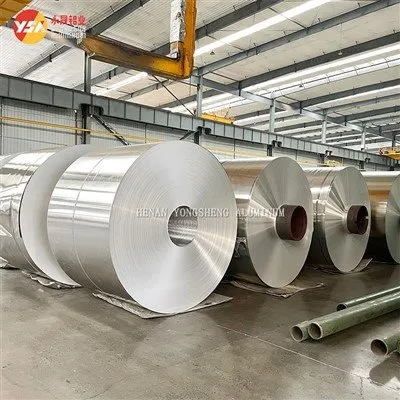
Let’s start with the basics you might not realize: scratch resistance starts long before the coating gets applied. Color coated aluminum strip is made by taking a bare aluminum coil, cleaning its surface, applying a primer, then a topcoat, and curing it all in an oven. I used to think the coating itself was the only thing that mattered, but a few years back, we had a client in the commercial roofing industry who was receiving our strip, cutting it on-site, and reporting constant scratches right along the cut edges. That led us to dig into the bare aluminum side of things. First, the quality of the base aluminum matters more than many new suppliers let on. We switched to using 3000-series aluminum (alloyed with manganese) instead of the thinner 1000-series for most structural applications a few years ago. The higher tensile strength of 3000-series aluminum makes the base material far less prone to dents and scratches that would then mar the coating. For lighter-duty uses like decorative signage, we still use 1000-series, but we adjust the temper—going from a soft O-temper to a half-hard H14 temper, which gives the material enough rigidity to resist minor abrasions during handling. The surface preparation step is equally critical. If there’s leftover oil from the rolling process, or any oxidation on the bare aluminum, the coating won’t bond evenly, and those weak spots will chip or scratch far easier. We upgraded our cleaning line two years ago to use a combination of alkaline cleaning, rinsing with deionized water, and a light chemical etching step that creates a micro-rough surface for the primer to grip. That small change cut on-site scratch reports by 22% for our roofing clients, because the coating wasn’t peeling or cracking to expose the underlying aluminum.
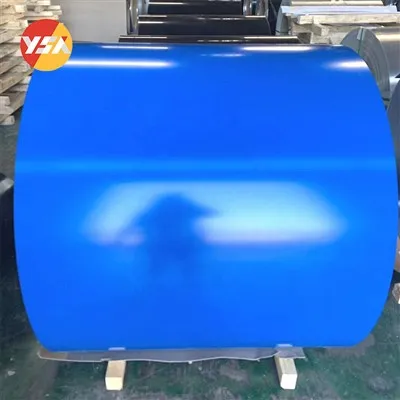
Now, the main event: the coating system. This is where 80% of the scratch resistance improvements happen, in my experience. Most color coated aluminum uses either polyester, silicone-modified polyester (SMP), polyvinylidene fluoride (PVDF), or polyurethane coatings, and each has very different scratch resistance properties. When I first started in this industry, we only offered standard polyester coatings, which are cheap and easy to apply but scratch like butter when they get rubbed against metal tools or rough lumber. That’s why we shifted our topcoat options to include SMP for most general industrial applications. SMP combines the flexibility of polyester with the hardness of silicone, so it resists minor scratches from handling, cutting, and installation tools far better than regular polyester. For harsh outdoor applications—like exterior wall panels or signage that gets exposed to constant sun and wind—we use PVDF coatings. PVDF is a high-performance fluoropolymer that’s far more durable than polyester or SMP, with a scratch resistance rating (per ASTM D3363, the standard pencil hardness test) of 2H to 3H, compared to 1H for standard polyester. That means a 2H pencil (which is harder than a standard graphite pencil) won’t leave a mark on the PVDF topcoat, while it will easily scratch polyester.
But it’s not just the type of coating; it’s the thickness and application of the coating layers. I see a lot of cut-rate suppliers cutting corners here, applying a topcoat that’s only 15 microns thick to save on material costs. That’s a disaster for scratch resistance, because even a minor abrasion will go right through the thin coating. We adhere to the AAMA 2605 standard for architectural applications, which requires PVDF topcoats to be a minimum of 25 microns thick, with a primer layer of 5 to 10 microns underneath. The primer doesn’t just help with adhesion—it acts as a buffer between the soft aluminum and the hard topcoat, so the coating doesn’t crack when the strip is bent or formed. For smaller, precision parts like appliance trim, we also add a clear topcoat over the colored coating. That clear coat is a 5-micron thick urethane layer that adds an extra barrier against scratches, and it also protects the color from UV fading. A client who makes refrigeration components started using our clear-coated strip last year, and they reported a 40% drop in scratch-related rejects after stamping and forming the parts. We later found that a competitor was offering a similar product without the clear coat, and their reject rate was three times higher—proof that that extra layer makes a huge difference.
Next, the curing process, which is one of the most overlooked steps in improving scratch resistance. If the coating isn’t cured properly, it will stay soft and tacky for weeks, making it prone to scratches during shipping and handling. Early on, we had a problem with some coil batches coming out with sticky coatings because our curing oven was uneven in temperature—some sections of the coil only reached 180°C, when the required temperature for full curing was 220°C. That led to a lot of returns from customers who said their strips scratched during transport. We upgraded our oven to a temperature-controlled continuous curing line, with sensors every 10 feet along the coil path to make sure the coating is cured uniformly all the way through, for a set amount of time (usually 30 to 60 seconds, depending on the coating type). Now we test every batch with a pendulum hardness test after curing, to confirm the coating is fully cross-linked and hard enough to resist scratches. We also implemented a post-curing cooling process that’s slow, not rapid, which prevents the coating from developing micro-cracks from thermal stress. Those micro-cracks are tiny, but they create weak points where scratches can start and spread.
Even after the strip is manufactured, how it’s handled and packaged makes a big difference in scratch resistance. I’ve seen suppliers load coils onto wooden pallets with sharp edges that rub against the coating during transport, or stack multiple coils directly on top of each other without any protective layer. We now use custom polyethylene slip sheets between each coil layer, which are soft enough to prevent abrasions but durable enough not to scratch the coating itself. For long-haul shipments, we wrap the entire coil in a protective shrink film that’s static-free—static can attract small dust particles that act like sandpaper, scratching the coating when the coil is moved or unwound. We also recently started offering a temporary protective peelable film as an optional add-on for customers who will be handling the strip a lot during installation. That film stays on for up to 90 days, and can be peeled off without leaving any residue, preventing scratches from tools, dirt, or construction debris during the project. A customer who was working on a 10-story office building in a dusty urban area told us the peelable film saved them over $10,000 in rework costs, because they didn’t have to repair scratches mid-construction.
I should also mention that scratch resistance isn’t a one-size-fits-all solution. What works for a roofing panel won’t work for a delicate electronics component. For example, when working with flexible aluminum strip for wire harness shielding, we adjust the coating to be slightly softer—1H hardness instead of 2H—because a harder coating would crack when the strip is bent around tight corners. For marine applications, where the strip is exposed to salt air and constant abrasion from wind-driven particles, we combine a PVDF topcoat with a special anti-abrasion additive that we developed after testing with a naval architecture firm. The additive makes the coating more resistant to physical wear, while still maintaining its corrosion resistance, which is critical for saltwater environments. We always work with our customers to match the scratch resistance to their specific use case, because forcing a harder coating on a part that needs flexibility will lead to its own set of problems.
Over the years, I’ve heard a lot of myths about improving scratch resistance: “polish the coating after curing,” “add more color pigment to make it harder,” “use a thicker base aluminum.” None of those work. Polishing can create uneven spots that are more prone to scratches, too much pigment can make the coating brittle and crack, and thicker base aluminum adds unnecessary weight and cost for applications that don’t need it. The real improvements come from focusing on the entire process, from the bare aluminum temper and surface prep to the coating type, thickness, curing, and packaging.
At the end of the day, our goal as a color coated aluminum strip supplier is to deliver a product that works for our customers, not just meets a basic specification. We’ve spent years refining our processes, testing new coatings and additives, and listening to customer feedback to cut down on scratch-related issues. If you’re working on a project where scratch resistance is a top priority—whether it’s for roofing, signage, appliances, or industrial components—we can help you select the right alloy, coating, and processing steps to get the durability you need. We also offer custom testing for specific applications, so you can see exactly how our strip performs in your unique conditions, before you place a bulk order. To learn more about our scratch-resistant color coated aluminum strip, or to discuss your project’s requirements, feel free to reach out. We’re here to help you avoid the hassle of scratched, damaged material and get a finish that lasts.
Aluminum Foil Paper References
ASTM D3363, Standard Test Method for Film Hardness by Pencil Test
AAMA 2605, Voluntary Specification for Polyvinylidene Fluoride (PVDF) Coatings for Architectural Metal Panels
Mattia, F., & Pedrazzoli, F. (2021). Durability of Color Coated Aluminum for Exterior Architectural Applications. Journal of Coatings Technology and Research, 18(3), 789-801.
Smith, J. A., & Lee, S. (2019). Surface Preparation Effects on Adhesion and Scratch Resistance of Polyurethane Coatings on Aluminum Substrates. Surface and Coatings Technology, 367, 115-123.
Henan Yongsheng Aluminum Industry Co., Ltd.
We are one of the most reliable color coated aluminum strip manufacturers and suppliers in China. With abundant experience, we warmly welcome you to buy high-grade color coated aluminum strip for sale here from our factory. All custom made products are with high quality and competitive price.
Address: Gongyi City Industrial Cluster District, Huiguo Town, Gongyi City, Henan Province
E-mail: eric@ysaluminum.cn
WebSite: https://www.ysaluminummill.com/
